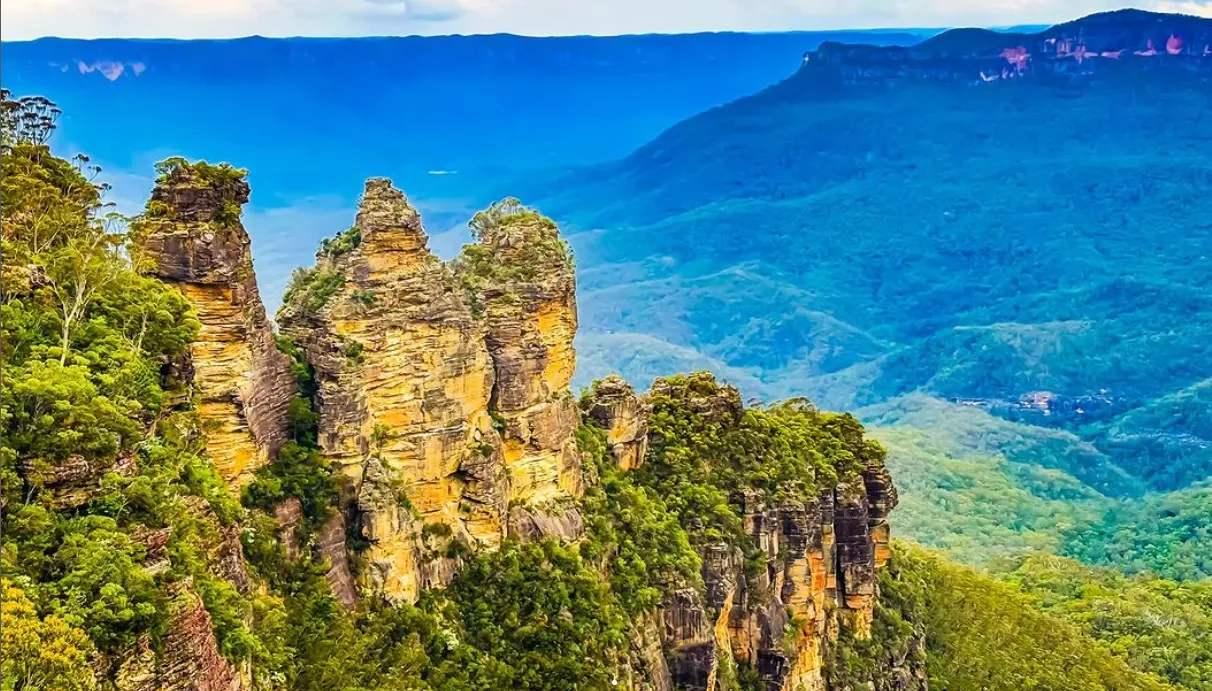
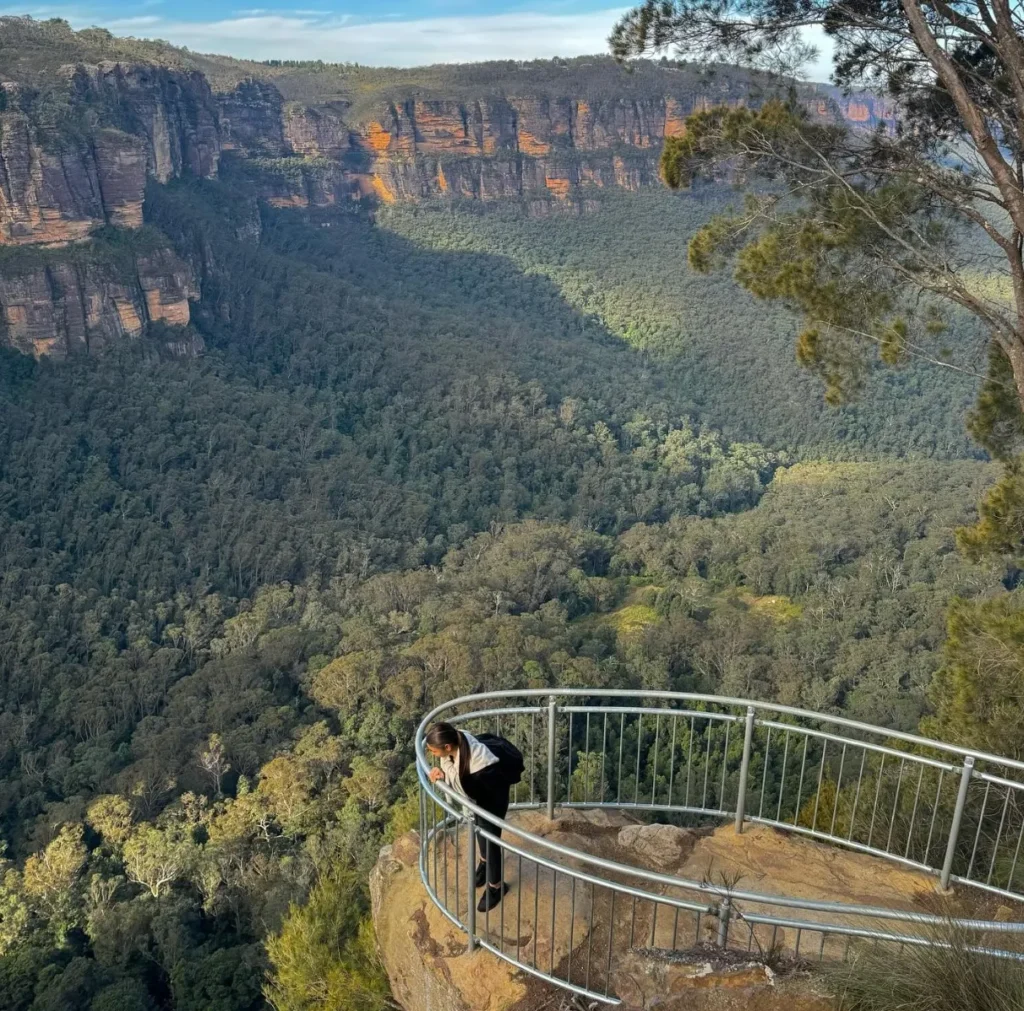
The Blue Mountains range is located on the east coast of Australia and begins about 60 kilometres west of Sydney. The Blue Mountains got their name from the extensive eucalyptus forests, as the evaporating essential oil from the leaves makes the area shimmer blue in the right daylight. The Blue Mountains are an exciting area both geographically, with striking mountain formations such as the Three Sisters, and ecologically. It is not without reason that the Blue Mountains region was declared a UNESCO World Heritage Site in 2000, as a diverse range of flora and fauna has settled there. The area is well developed; bus routes and hiking trails connect numerous viewing points in the Blue Mountains.
The eventful history of the Blue Mountains
The first inhabitants of the Blue Mountains were the Aborigines, who settled more than 14,000 years ago. At that time, the climate was much cooler, and there were winters with snow in the mountains. Traces of aborigines can, therefore, be found mainly in the caves or under rock ledges where people sought shelter at the time.
In addition to bones, rudimentary stone tools have also been found in the Blue Mountains, indicating that people once lived here. The region offered people a very good food source, as the Blue Mountains were rich in various animal species, such as wombats, kangaroos and wallabies, which they ate. The so-called “bush food” also included eggs, fish, reptiles and various fruits and plants such as tree ferns, whose pith they ate. The Aborigines left traces in the Blue Mountains, including rock paintings and grinding grooves in the rock walls, which were created by sharpening the stone tools.
The settlement of the Blue Mountains
When the first settlers arrived, the Aboriginal people may have hidden in the Blue Mountains, as they reportedly believed the area to be uninhabited. A smallpox epidemic in 1789 may have also led to the deaths of many of the aboriginal people of the Blue Mountains. Even today, six different dialects are spoken among the aboriginal people in the area.
Although the Blue Mountains were difficult to cross, settlement began around 1814. Raw materials such as coal were mined in the region around 1900, but the region’s recreational value was discovered early on. The mines were, therefore, closed again in the 1940s, and the remains of a few mines can still be visited today in the towns of Katoomba or Lithgow in the Blue Mountains.
Interesting rock formations in the Blue Mountains
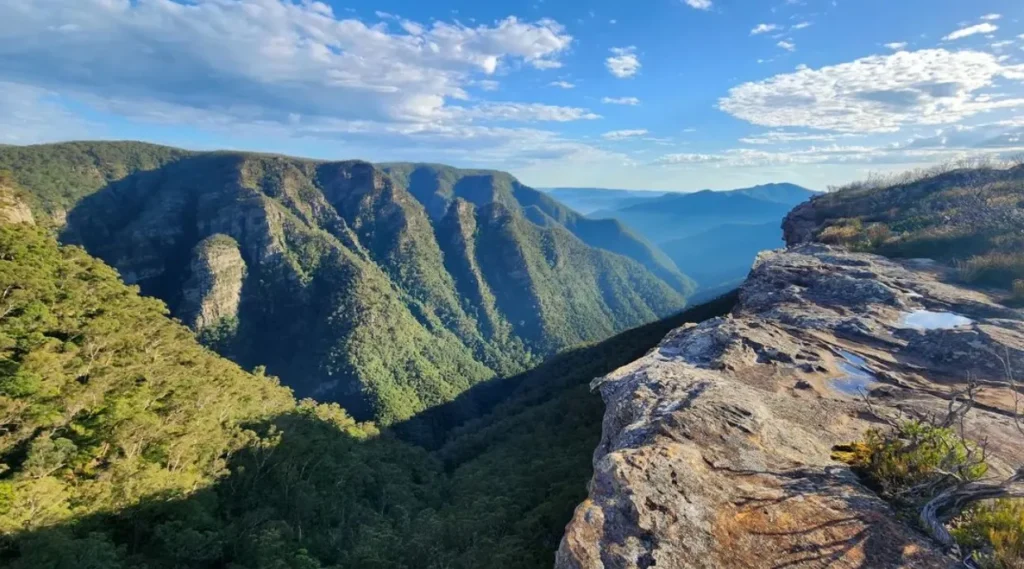
The Blue Mountains are part of the largest mountain range in Australia, the Great Dividing Range. The mountains separate the hinterland from the coast and thus also influence the weather. The entire massif in which the Blue Mountains are located stretches from the northern tip of Queensland across the entire east coast and then turns westwards, gradually tapering off into the large central plain. The Blue Mountains begin at the Nepean River, reach as far as the Hunter Valley and have a north-south extension of around 300 kilometres.
Some mountains in the Blue Mountains have distinctive shapes that have shaped the Blue Mountains, such as the Kanangra Wall, which is a popular climbing area. However, the three-peaked rock massif Three Sisters in the Blue Mountains National Park is far more famous.
The Three Sisters
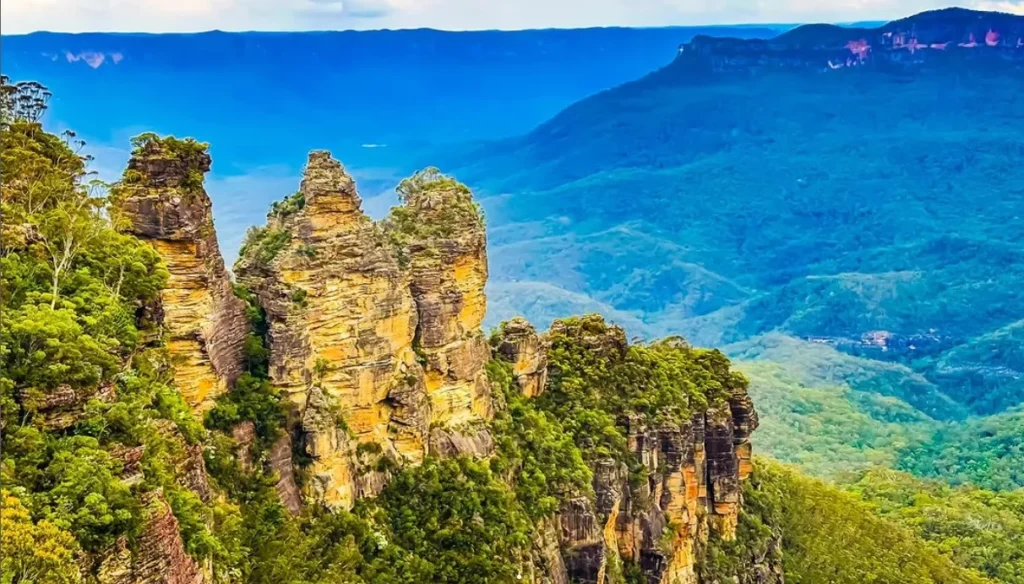
The Three Sisters rock formation is located near the town of Katoomba in the Blue Mountains, and the remaining remains of sandstone layers are located there. The different layers of sediment created by erosion can be seen from a distance. Wind and weather have eroded the loose rock over the centuries, and all that remains are the three rock peaks, which, in contrast to the loose sandstone, consist of firmly cemented quartz grains.
The names of the Three Sisters, Meehni, Wimlah and Gunnedoo, are derived from a so-called Dreamtime legend that is part of the mythological world of the Aborigines. According to this legend, three sisters lived in the region with their father, Tyawan, a witch doctor. A so-called Bunyip is a legendary animal figure that is said to live in the rivers, swamps and waterholes of Australia. Legends say that they wait for unwary people and animals and then drag them down to their resting place underwater to devour them.
Understandably, the three sisters of the Dreamtime legend were also afraid of this creature. One day, according to the story of the Aborigines in the Blue Mountains, Meehni was frightened by a centipede and threw a stone at it. This rolled down the cliffs of the mountains and woke up the Bunyip. In anger, the Bunyip attacked the three sisters. Their father took his magic bone to protect them and transformed the three sisters, who were standing close together, into rock towers.
When the Bunyip tried to attack Tyawan, he turned into a bird and flew away. In the process, however, he lost his magic bone, which he still searches for in the Blue Mountains to this day, to transform the Three Sisters back into their human form.
The Blue Mountains Nature Reserve
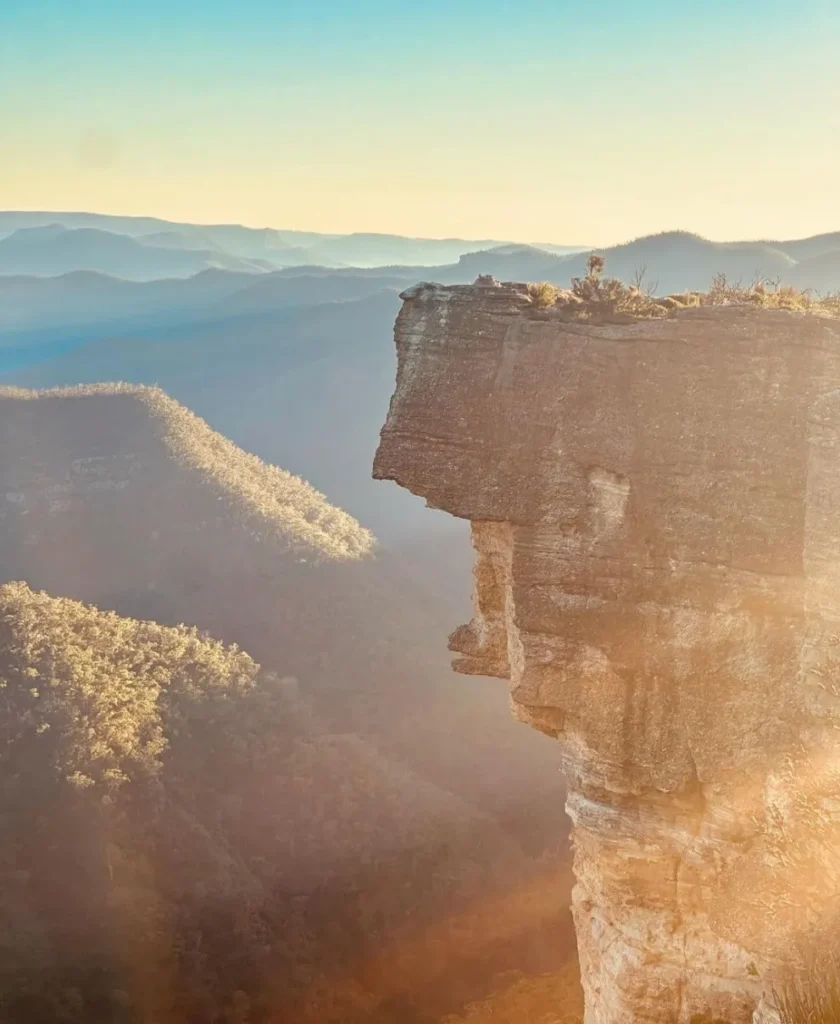
The Three Sisters and the entire Blue Mountains region have flora and fauna worth protecting, which is why several protected areas and national parks exist. The Three Sisters are located in the Blue Mountains National Park, the largest protected area in the Blue Mountains. Seven other national parks and smaller protected areas are also home to unique flora and fauna.
The Three Sisters watch over koalas, various nocturnal marsupials such as the flying possum, which are rarely seen, and numerous bird species that thrive in the extensive eucalyptus forests. The Three Sisters don’t just have to fear the bunyip; more dangerous is the dingo, a feral dog that also prefers to retreat into isolation. In the Blue Mountains alone there are 90 different types of eucalyptus and over a hundred other species that only grow in this area.
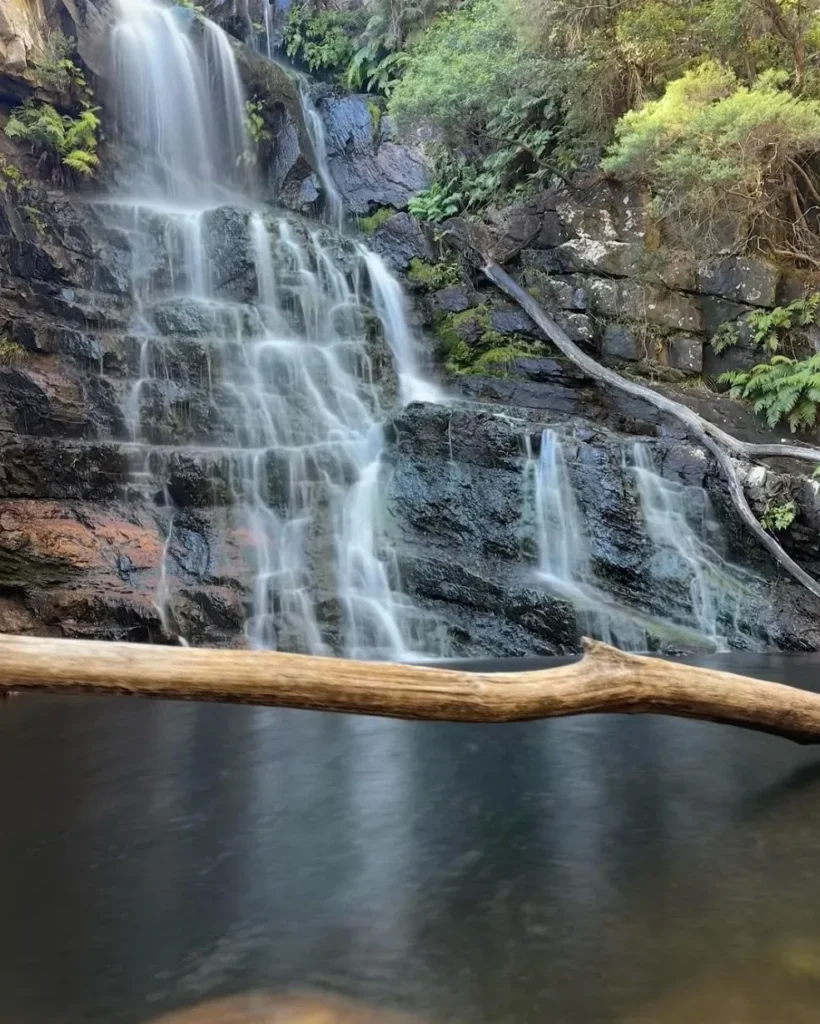
The Blue Mountains are a very dry area with only water in a few places with dense rainforests. One of the most important botanical discoveries in the Blue Mountains was the Wollemi pine. These ancient conifer species were previously only known from fossils and were even considered extinct.